


Nowadays, most webpages are seeing a decline in direct human traffic. For example, giants like Wikipedia and CNN are receiving around 30% fewer click-throughs compared to the era before AI-driven search tools. The introduction of Google’s AI Overviews alone is slashing click-through rates (CTR) up to 60% for most of the wesbites.
On the other hand “zero-click” traffic driven by AI agents is skyrocketing as users pivot toward getting information directly from their AI models. The entire internet is now being constantly indexed by AI bots and various agents. Consequently, building an effective website in 2026 requires prioritizing accessibility and readability for Large Language Models (LLMs).
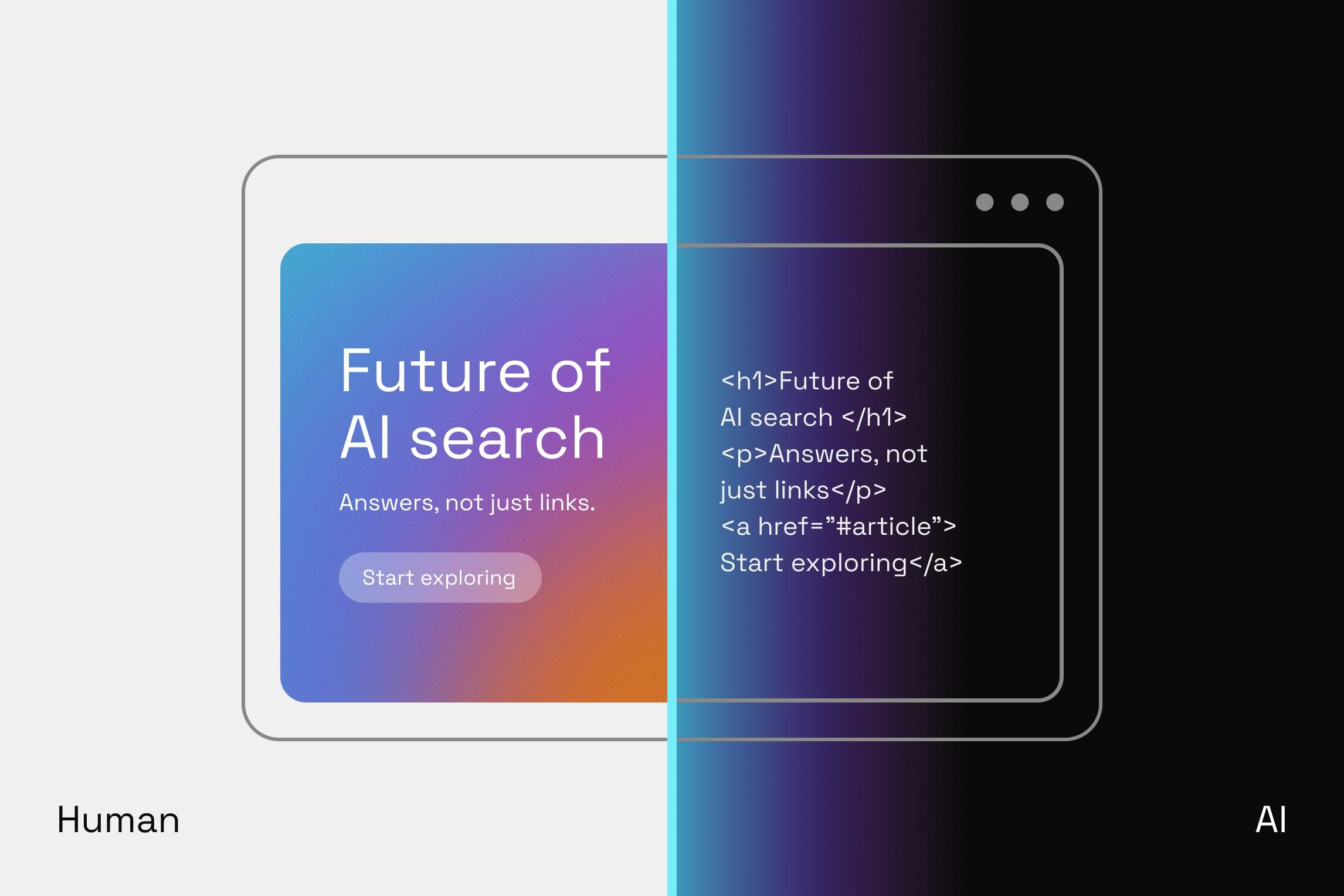
Follow these 5 steps to help AI models recommend your site to more people:
1. Be Specific
AI bots hunt for details: the what, where, when, how, and for whom. They look for informations written in straightforward, simple, and informative language. However, since humans are still visiting your site, your branding and “voice” remain essential. The solution is a hybrid content solution that satisfies the technical requirements of LLMs while maintaining the emotional resonance of your brand for human readers.
2. Master Your Structure
Proper HTML hierarchy is essential for AI processing. Stick to a clear structure: one H1 for the main topic and H2s for your sub-sections. Since AI-bots are not able to read texts from your images and videos, ensure your core message is available as selectable text rather than integrated into a graphic. Use Alt Text to describe your visuals and never skip your Meta tags—these are the “handshake” between your site and the AI crawler.
3. Implement “Section Chunking”
Never use giant “rich text” blobs on your webpage. Instead, break your content into dedicated modules and distinct sections. Ensure that each section is digestible for humans and self-contained. This means that if an AI agent pulls only one specific section from your page, that snippet must make sense on its own without the context of the rest of the site. A great practice is to end every section with a “Key Takeaway”—a two-sentence summary that acts as a citation-ready quote for AI models to use in their answers.
4. Create a Dedicated Page for AI
AI bots often require specific data points that don’t always align with the visual needs of a human reader. A smart strategy is to create a dedicated page—linked from your footer like a Privacy Policy—designed specifically for these agents. Think of it as a “Wikipedia entry” for your business, containing precise details about your products, company history, highlights, and credentials. To do so you can even ask LLM to help you generate this AI-friendly summary. Use Schema markup to tag data and guide AI agents to your most important content.
5. Use Comparisons
Comparisons are highly effective for both humans and AI. When creating them, use complete, precise sentences to describe your points. Start with a short paragraph clearly describing your offer, then follow it with evidence—such as positive client reviews—to back up your claims. This provides AI agents with the direct “proof” they need to recommend you over a competitor.
Traditional SEO 🔍
Rank #1 in search results.
Clicks: Getting users to your site.
Long-form for human engagement.
Keywords & Search Volume.
User clicks your blue link.
Optimization for AI 🤖
Be the “chosen” answer & source.
Mentions: Being cited by the AI.
Modular, self-contained “chunks.”
User Intent & Contextual Logic.
AI says: “According to your brand…”
Optimizing for AI isn’t just a trend—it’s the new standard for digital visibility in 2026. By making your content self-contained and technically scannable, you ensure your brand stays at the top of every AI-generated answer.